ECHOES OF
FISKEMOTTAKET
Where the hands of fishermen carry memory, tradition, and the soul of the sea.
ABOUT THE PROJECT
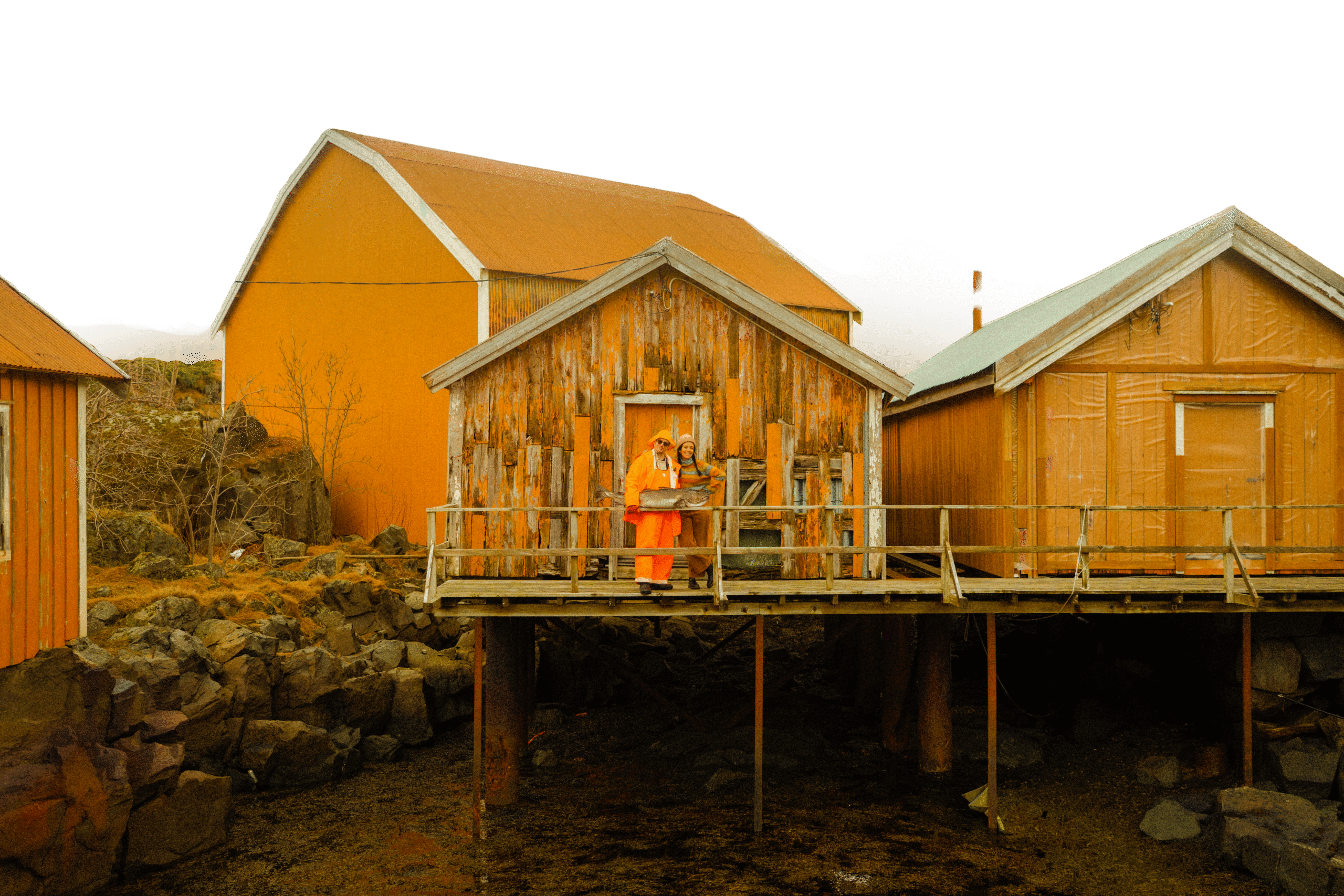
In the remote islands of Lofoten, the rhythm of the sea continues to shape not only the lives of fishermen, but also the cultural fabric of an entire community. Fishing is more than labor— it is a heritage vessel, passed down through gestures, textures, and taste.
This project explores the intersection of food, memory, and identity through the lens of the coastal tradition. The drying of fish, the mending of nets, the preparation of meals —all become acts of preservation, both literal and symbolic.
As tourism increasingly reshapes these coastal spaces, tradition is no longer only lived, but also staged, consumed, and aestheticized. Through photography and artistic research, I investigate how art can both document and question the transformation of heritage into experience.
THE VISION
As an artist from Greece, I carry with me the textures and rhythms of my own coastal heritage — the sounds of nets being repaired, the salt on skin, the taste of fish passed from one generation to the next.
In traveling to Lofoten, I found echoes of this memory in a different light: colder winds, northern landscapes, but the same hands — weathered, skillful, and deeply rooted in sea- bound life.
This project is a dialogue between two fishing worlds. Between the Mediterranean and the Arctic, I explore how food, labor, and tradition shape cultural identity. In both places, fishermen are more than workers — they are carriers of memory, stewards of inherited knowledge.
Through photography, I trace these shared gestures — the cleaning, the mending, the waiting. I see these coastal communities not as nostalgic images, but as living, evolving archives.
This work is my attempt to honor those roots and those I encounter — to build a bridge between the Greek fishing villages I know and the Lofoten shores I have come tounderstand.
As an artist and working daily in the fish & chips food truck in Hamnoya, I see first-hand the tension between tradition and industry, between authentic food culture and mass production. Our mission is simple but vital: to support local fishermen, buy directly from small-scale producers, and keep alive this heritage.
Through my artistic work, I aim to document, reflect, and celebrate this disappearing knowledge — the people who fish with care, the hands that carry memory, and the food that connects us to place.
Before the engines, before the maps,
there were only men, wood, and salt.
They went out into the grey morning — not to fight the sea, but to know it.
To listen to its rhythm.
To respect its hunger.
The fisherman is not just a worker.
He is a keeper of time.
His hands remember what the body forgets.
His eyes read the sky like scripture.
We speak today with one of them.
One who still rises before the sun.
One who trusts the sea, even when it turns its back.
One whose life is written in tides.
This is not just a job.
It is a ritual.
A heritage of silence, skill, and survival.
So we ask:
What does it mean to belong to the sea?
And what does the sea leave behind — in a man?
The Hand Remembers.
What was this place like back then?
What sounds, smells, memories come to your mind?
Can you tell me how you first started working here?
Did you ever think this place would open again?
You’re coming back, but in a new role. How do you feel about that?
What are you hoping people will experience when they walk in here?
How did you learn to fillet fish? Who taught you?
What makes a good fish fillet? What does your hand know that a machine doesn’t?
Why Is this your way of keeping the tradition alive?
What do you feel when you work with fish ?
What does it mean to return, not just to a place, but to a way of life?
How many fish have passed through your hands? Could you count?
Did the sea miss you? Did you miss it?
Can tradition survive if no one remembers how it feels?
What was this place like back then? What sounds, smells, memories come to your mind?
Can you tell me how you first started working here?
Did you ever think this place would open again?
You’re coming back, but in a new role. How do you feel about that?
What are you hoping people will experience when they walk in here?
How did you learn to fillet fish? Who taught you?
What makes a good fish fillet? What does your hand know that a machine doesn’t?
Why Is this your way of keeping the tradition alive?
What do you feel when you work with fish ?
What does it mean to return, not just to a place, but to a way of life?
How many fish have passed through your hands? Could you count?
Did the sea miss you? Did you miss it?
Can tradition survive if no one remembers how it feels?